Posted in Brave Alice Games, Gaming News, Hobbies, Indie Games, Inside the Game, Tabletop Gaming, TTRPGs

Inside the Game – RPG Stories: a VTTRPG Worldbuilder

2–3 minutes

I love trying out many different games, and my Steam library is populated by numerous RPGs and survival games. Yet, amongst those are a handful of programs that I find fun or useful. One of those programs is RPG Stories by Brave Alice Games.

This program is a Virtual Tabletop (VTT) 3D worldbuilder created to allow you, the GM, to create settings for your fantasy, horror, or Sci-Fi TTRPG. It features tools and models to build whatever you want.

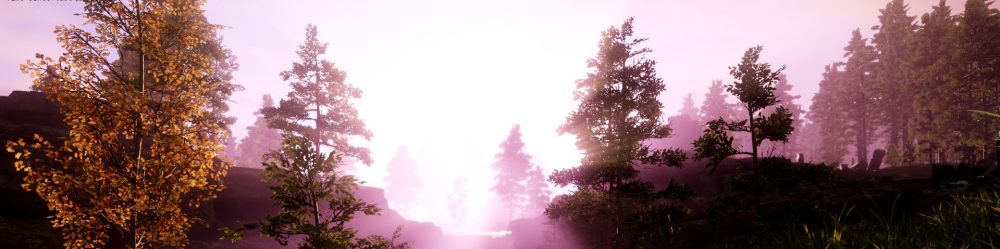
Do you need a haunted forest with an abandoned witch’s shack in the middle? You can make that. Want to create a town with a large inn for your adventurers to congregate and plan their next adventure? Go for it. Need a far-future sci-fi setting for your gritty war adventures? You can do that too.

The program, despite being early access, already has an array of models and building places to choose from. You can place them where you want, scale them to fit, mix them with other pieces. There’s also a wide variety of clutter pieces, from tables and chairs to small bric-a-brac to populate shelves and more. And if the program doesn’t have quite what you’re looking for, the community may have it as there’s an active workshop where people add creations, some of them impressive in their own right.

Beyond the building itself, you can import a 2D map of a campaign setting and use it as a template to create the 3D version.

I’ve tinkered with it, creating a large inn, and the controls were easy to use once I figured out what they were. Once I’m a bit more comfortable with the controls, I’ll even do a couple of quick videos showcasing what can be done with the building features.

Now, a 3D setting is nice, but what good is it if you can’t let your players play in it? Well, you can do that too, if you own the GM version and your players own the player version. The initial outlay for the GM will be $35.98 USD + tax on Steam, while each player copy will cost $18.99 USD + tax on Steam. So, while it’s not the cheapest, it’s not super expensive and doesn’t require monthly subscriptions.

With that, you can use the tools available to add mobs to for your players to fight, interactable objects, and even fog of war so nothing gets spoiled before players get to an area. I’m sure there’s a lot more to this, but I’ve not gotten that far yet.

And, currently, they’re running a Kickstarter for an expansion called VTT Expansion: The Wrath of Devs, which will add procedurally generated scenes, VTT exports, pre-built quests, and more. Depending on if you own the game or not, you can elect to fund just the expansion ($25.00 USD), buy a player version along with funding the expansion ($49.00 USD), buy the GM version + fund the expansion ($73.00 USD), and more.

With the developer’s dedication to constantly updating and adding to this program, I’d say it has potential to be a solid Virtual tabletop for most of your gaming needs. I highly recommend heading over to Steam to check out the demo and see if it meets your gaming needs.

Until next time, bye for now!

Posted in Gaming News, Hobbies, Indie Games, Inside the Game, Palworld

Inside the Game: Palworld

4–6 minutes

If I had a dime for every time I heard someone say ‘that game is for kids, adults shouldn’t be playing it’ I’d probably be on a nice tropical beach right now, drinking something fruity and getting a sunburn. The most recent iteration of this sentiment came from the Steam forums for the new hit, Palworld. Their argument was that it’s ‘a Pegi 12 game with childish graphics and childish elements’ and then went on to ask why, followed by ‘but I absolutely don’t judge’.

I’m rolling my eyes now because I’m at least 80% sure that, yes, they were judging. I’m almost 100% certain that this was one of the many troll posts that have popped up since the game took off, raking in over 7 million copies sold in under a week. Impressive numbers for a very small development team with no prior game development skills!

All of that aside, why would adults play a game like Palworld? Well, the short answer is – because it’s fun, and adults don’t forget how to have fun just because they’re, well, adults.

The longer answer is that Palworld, while not offering anything groundbreaking, has taken what many people loved about different games and put them together to create an overall experience that’s fun and as relaxing or challenging as you want it to be.

The biggest component, of course, is the creature capturing in the game. Many people are comparing it to Pokemon, and I’ve even called them Pokemon more than once myself. You go out in the world, battle a Pal, get it down to low health and then throw a Pal sphere at it. If you’re successful, you’ll add the critter to your collection and can use it to help you battle the next one.

Or, you can put it to work on your base, which is the next component in the game – base building. While this is clearly still in the rudimentary stage, with a lot of room for improvement, it’s also decently done for early access. You gather materials, using wood and stone to craft foundations, walls, and roof. You set down a bed for yourself and beds for your incoming collection of Pals, because they need a place to sleep too! You can build the usual workbenchs to make, upgrade, and repair your gear. You can even create workstations for the Pals such as a stone pit or wood pit. Note, these stations require Pals with the right abilities to man them.

You’ll want to keep yourself and your Pals fed, which leads us to the next component – the survival aspect of the game. Or, survival lite. This game isn’t terribly strenuous in this regard. Food is easy to come by, the easiest being berries that you find everywhere and can be eaten raw or baked. They’ll provide fuel for you and your Pals. Eggs are also easy to get, and any time you fight certain Pals, whether you simply capture them or knock them out, you’re likely to get meat. The only downside to the food system is the incredibly constrictive decay timer. The abundance of food mitigates this considerably, as does the icebox you can craft pretty early on in the game, paired with an ice-type Pal to keep it cold.

Of course, to collect all of these Pals you’ll need to help keep your base running you’ll want to explore the world. In Palworld, the world is bright, colorful, and brimming with different Pals to capture. However, they never interact with you first; you always have to start the battle, so in this aspect, the world feels a little static. Despite this, it is fun to explore, find little lore fragments, materials, chests, and even little events such as poachers hunting Pals.

Poachers can be fought to stop them because, of course, there is fighting in the game, beyond the Pals themselves. The poachers are part of a group called the Syndicate, and you’ll want to find and beat their bosses. Beating them will earn ancient technology points used to unlock key items for your base, such as the egg incubator. You can also get these points from fighting boss Pals out in the open world.

Out of all the systems, I’d say fighting is the most fleshed out. You have a variety of ranged and melee weapons you can craft, the ability to dodge, and the Pals to help you. Again, it’s not perfect and could use some tweaks, but it works well.

While none of the systems are exceptional and could all use refining, overall, everything works well together. There are, of course, bugs. Some of them are silly, such as Pals that don’t always path correctly, Pals that will wander off after you’ve set them a task, or berry bushes continuing to grow in a spot through the floor of your base. There have also been reports of saves not working right. Many of these are being worked on by the developers, Pocketpair, according to their roadmap.

And yes, they even plan on adding some version of PvP to the game later. It should be interesting to see what form that takes!

I doubt the developers expected the game to reach the numbers it did and so fast. I don’t think anyone did, as many people considered it a ‘meme game’, something that would do modest numbers at most. Yet Palworld has created something that many people can find fun in. And, at the end of the day, that’s what games are supposed to do.

So, back to the short answer – why do adults play Palworld? Because it’s fun.

Perhaps it’s time for AAA companies to pay attention, stop cramming their games full of unwanted microtransactions and battlepasses, and once again create games centered around fun. Until then, gamers like me will direct our eyes, and our dollars, towards indie studios.

Have you played Palworld? What do you think of it so far? Leave a comment and let everyone know.

Until next time, bye for now!